
Executive summary
School websites fail to convert because they lead with institutional content instead of answering parent search queries about outcomes, costs, and program comparisons, averaging under 2% conversion versus top performers at 5%.
Your School Website Is Not Converting: How to Build an Enrollment Engine
Executive Summary
- Direct answer: A school website that doesn't convert typically leads with institutional content (founding dates, mission statements, aerial campus photos) instead of answering the questions families actually search: outcomes, costs, class sizes, and program comparisons. The average private school website converts under 2% of visitors into inquiries.
- Key insight: 64% of U.S. teens now use AI chatbots like ChatGPT for information search (Pew Research Center, December 2025), and 46% of Gen Z prefer social media over traditional search engines. Your website isn't just competing with other school websites. It's competing with Reddit threads, TikTok videos, and AI-generated summaries.
- RC Strategies perspective: We treat school websites the same way we treat any performance asset: every page measured, every conversion tracked, every dollar justified. A website that can't tell you its conversion rate isn't being managed as a performance asset. It's a brochure.
- Actionable takeaway: Stop thinking in redesign cycles. Start thinking in conversion optimization cycles: search-optimized content, mobile-first inquiry forms, financial aid calculators, structured data for AI discoverability, and sub-five-minute response workflows.
Pull up your school's homepage right now. What do you see? A hero image of campus. A founding year. A mission statement. Maybe a drone shot. Now ask yourself: does any of that answer what a parent actually searches at 10pm when she's comparing your school to three others on her phone? Most school websites are built to impress accreditors and board members, not to convert the family who's actively shopping. The fix isn't a redesign. It's a conversion architecture that meets families where and how they actually research.
A school website that doesn't convert typically leads with institutional content instead of answering the questions families actually search: outcomes, costs, class sizes, and program comparisons. Fixing this requires rebuilding the site as a conversion engine with search-optimized content, mobile-first inquiry forms, financial aid calculators, and structured data that feeds AI search tools.
Pull Up Your Homepage. What Does a Parent See?
Most school websites suffer from what we call the "brochure mindset." They're built for internal stakeholders: boards, accreditors, faculty committees. The founding year sits in the hero. The mission statement floats above the fold. An aerial drone shot fills the background. None of this answers a single parent search query.
What Parents Actually Want vs. What Schools Show
Parents search for outcomes data, tuition transparency, class size specifics, and program comparisons. They expect to find complete tuition and financial aid information without having to contact the school directly. 60% of parents considered sending their children to a different school in 2025. They're comparison shopping, not passively browsing.
| What Your Homepage Shows | What Parents Actually Search |
|---|---|
| Founding year and history | "Best private schools near me" |
| Mission statement | "Small class sizes elementary school [city]" |
| Aerial campus photo | "How much does [school name] cost?" |
| Welcome message from the head of school | "Graduation rate at [school name]" |
| Accreditation logos | "Is [program name] worth it?" |
The Conversion Gap Has a Number
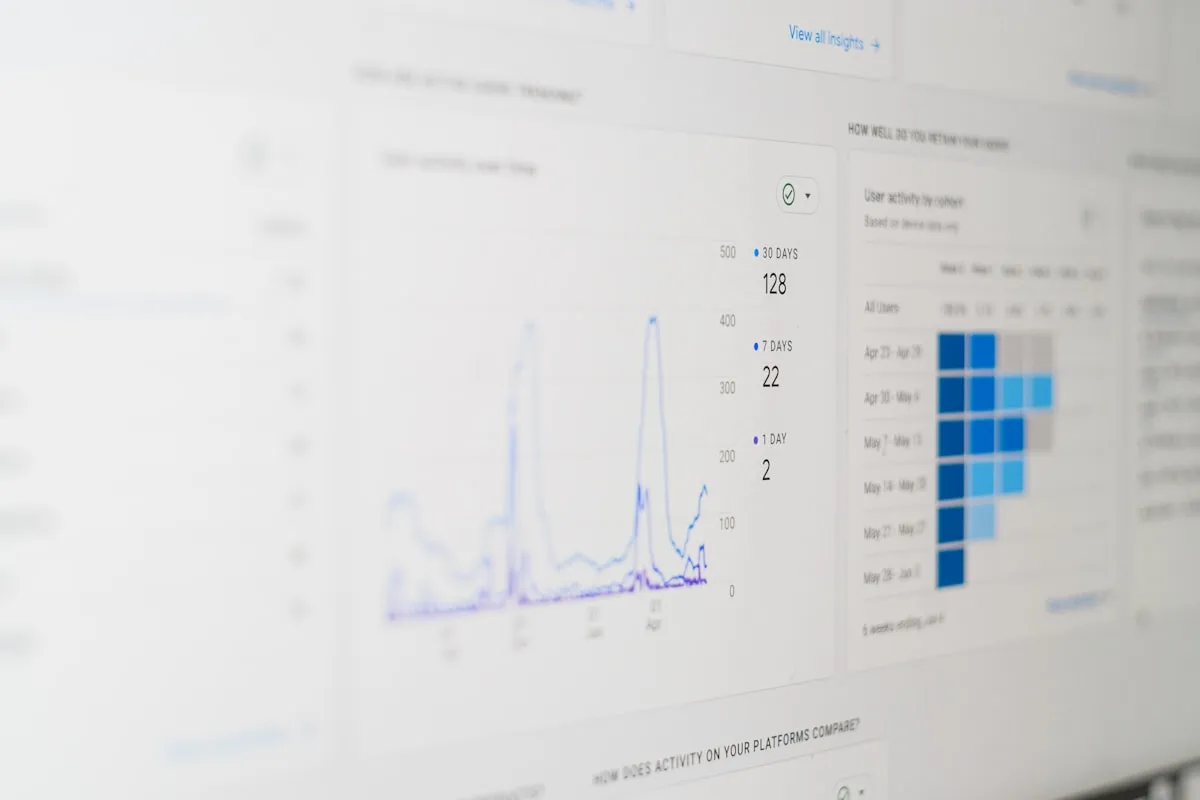
The average private school website converts under 2% of visitors into inquiries. That's the baseline. Meanwhile, Unbounce data shows that the median education landing page converts at 8.4%, nearly 27% higher than the all-industry baseline of 6.6%. Higher ed pages convert at 6.3%. Primary education sits at just 4.9%. Education landing pages can convert well. Yours just isn't built to.
Top-performing school sites hit 5% or higher. The gap from 2% to 5% is the difference between scrambling for enrollment and filling seats.
The Stakes Are Existential
WICHE projects a 13% decline in traditional-age college students by 2041, with high school graduates peaking at 3.9 million in 2025 before a sustained drop. Sixteen nonprofit colleges announced closures in 2025 alone (Inside Higher Ed). The enrollment cliff isn't a forecast anymore.
The decline isn't uniform. Thirty-eight states will see drops: 32% in Illinois, 29% in California, 27% in New York. If your school website isn't converting the families who do find you, every lost inquiry compounds against a shrinking prospect pool.
So if your homepage doesn't answer what families actually search for, what ARE they searching? And where?
What Families Actually Search, and Where They Search It
Parents don't search for your mission statement. They search for answers. The disconnect between parent search behavior and school website content is where most education SEO fails. And the channel problem is just as severe as the content problem.
Gen Z Has Moved Beyond Google
46% of Gen Z and 35% of millennials prefer social media over traditional search engines (Forbes Advisor / eMarketer). Sprout Social confirms: 41% of Gen Z turn to social platforms first for information, ahead of traditional search at 32%. The subreddit r/ApplyingToCollege has 1.3 million members actively discussing admissions, comparing schools, and sharing application strategies. All of it happening entirely outside institutional tracking or influence.
| Channel | Gen Z Usage | Your School's Visibility |
|---|---|---|
| Social media (TikTok, Instagram, YouTube) | 41-46% use as primary search | Likely minimal or unoptimized |
| AI chatbots (ChatGPT, Gemini) | 64% of teens use; 28% daily | Depends entirely on structured data and content quality |
| Reddit (r/ApplyingToCollege) | 1.3M members, highly active | Almost certainly zero presence |
| Traditional search (Google) | 32% of Gen Z use as primary | Where most schools focus 100% of effort |
AI Chatbots Are Now Mainstream Research Tools
According to Pew Research Center (December 2025), 64% of U.S. teens use AI chatbots like ChatGPT or Google Gemini. 28% use them daily. Information search leads usage at 57%, followed by schoolwork help at 54%. When a prospective student asks ChatGPT "What are the best nursing programs in Ohio?", your school either shows up in that answer or it doesn't. There's no second-page ranking in AI.
Seventy percent of modern learners now use AI tools for school information gathering. That number will only grow.
The Dark Funnel Is Where Decisions Happen
Families spend months in stealth mode before any trackable conversion occurs. By the time a student submits an inquiry, they've already shortlisted schools and largely decided. Your website competes not just at the point of inquiry, but during months of invisible research across platforms you may not even monitor. That's not a website problem. That's a pipeline problem.
If this is where and how families research, what does your website need to become to actually capture that demand?
A school website that can't tell you its conversion rate isn't being managed as a performance asset. It's a brochure.

Conversion Architecture: How Enrollment Engines Actually Work
Website visits are the most easily convertible of all inquiry sources (Collegis Education). Even small increases in conversion performance can have outsized impacts on enrollment metrics. This isn't about driving more traffic. It's about converting the traffic you already have. RC Strategies builds school and university websites as this kind of conversion engine, with the inquiry-to-application path instrumented before any traffic is bought.
The Conversion Pathway, Made Explicit
Every enrollment engine follows a deliberate sequence: search query → landing page → inquiry → tour booking → application. Each step must be measured and optimized. Most school sites break the chain at step two because the landing page doesn't answer the question that brought the visitor there.
Five Essential Conversion Tools Most School Sites Lack
- Financial aid calculators / net price calculators: Parents expect self-service access to cost information. If they have to call to learn the price, most won't call.
- Virtual tour CTAs above the fold: Not buried in a "Visit" sub-menu three clicks deep. Visible on every admissions page, immediately.
- Program comparison tools: Let families compare programs, outcomes, and costs side-by-side. Answer the comparison query on your own site before Reddit does it for you.
- Mobile-optimized, short inquiry forms: Every additional field reduces completion rates. Name, email, program of interest. That's it for first touch.
- Sub-five-minute response workflows: Institutions that respond to inquiries within five minutes are significantly more likely to engage prospects than those that wait even an hour. The architecture doesn't end at form submission.
Mobile-First Is Non-Negotiable
58% of school website visits happen on mobile. 40% of Gen Z accesses the internet only via phone. "Mobile-tolerant" isn't the same as "mobile-first." If your inquiry form requires pinch-to-zoom or loads in more than 3 seconds on cellular, you're losing families during commutes, lunch breaks, and pickup lines at soccer practice.
Video as a Conversion Multiplier
Parents spend 3.2x more time on pages with video content compared to text-only pages. Video on landing pages can boost conversion by up to 80%. A 90-second video of a current student walking through a day at your school will outperform a 2,000-word "About Us" page every time.
Proof That Conversion Architecture Works
When the University of Alaska Anchorage had 9 programs at risk of elimination, RC Strategies' performance-focused approach delivered 28% more applicants year-over-year and helped save those programs. Separately, our digital marketing strategies for schools have driven a 52% decrease in cost-per-student acquisition. That's the ROI of building a conversion engine instead of just spending more on traffic.
Stop thinking in redesign cycles — every 3–5 years, six figures, a new site that still doesn't convert — and start thinking in conversion optimization cycles: continuous measurement, continuous improvement, tied to enrollment KPIs.
A well-built conversion architecture captures the families who find your site. But what about the ones asking AI for recommendations and never visiting your site at all?
AI Discoverability: Getting Cited Where Gen Z Actually Researches
SEO gets you ranked in traditional search. That's necessary but no longer sufficient. The evolution looks like this: SEO (ranking in Google) → GEO, or Generative Engine Optimization (appearing in AI-generated overviews and summaries) → AEO, or Answer Engine Optimization (being the cited source when AI answers a question). Your program pages need to answer the exact questions students ask ChatGPT, not just rank for keywords in Google.
Structured Data Is the Foundation
31.2% of websites lack proper structured data. Those implementing comprehensive schema markup see up to 40% increases in click-through rates. Schema markup clarifies entities, relationships, and key facts that large language models use during retrieval. Without it, AI tools can't reliably extract and cite your information.
For schools, this means implementing specific schema types:
- FAQPage schema on admissions pages (answering: What does it cost? What are outcomes? What are requirements?)
- Article schema on blog content and research pages
- EducationalOrganization schema on your institution's core pages
- Program-level structured data answering: What is this program? What does it cost? What are the outcomes? What are the admission requirements?
Content That Feeds AI Answers
Structure every program page to directly answer the questions a student would ask a chatbot: average class size, job placement rate, and tuition after financial aid. Sources cited by answer engines experience 27% higher click-through rates compared to traditional search placements. Being the cited source in an AI answer is the new number-one ranking.
Building Presence Beyond Your .edu
Social SEO (optimizing content for search within TikTok, YouTube, Instagram), genuine Reddit presence in relevant threads, and YouTube content that answers the same questions your program pages should answer: all of this feeds the digital marketing strategy for higher education that works in 2026. You need to be present in the spaces where research happens before a student ever types your URL. As noted earlier, 64% of teens now use AI chatbots. The training data for those tools comes from structured, well-cited content across the web. If your institution isn't producing it, you're invisible to the answer engines that prospective students rely on.
You don't need to overhaul everything at once. Start with a diagnostic.
Tips for Success
Test Your School's AI Visibility Now
Open ChatGPT and ask about programs in your area. If your school doesn't appear in the answer, you have an AEO problem. 64% of teens now use AI chatbots for research, making AI citation more valuable than traditional search rankings.
Lead With Outcomes, Not History
Parents search for graduation rates, job placement data, and class sizes—not founding years or mission statements. Schools converting above 5% answer parent questions within 10 seconds, while average sites converting under 2% prioritize institutional content over family needs.
Five Questions to Ask About Your Website Right Now
These are the five questions RC Strategies asks in the first hour of an enrollment website audit.
- Does your homepage lead with student outcomes or your founding year? If a parent can't find graduation rates, job placement data, or program-specific outcomes within 10 seconds, your homepage is a brochure.
- Can a parent find tuition and financial aid information in two clicks or fewer? 60% of parents considered switching schools last year. They're comparison shopping. If cost transparency requires a phone call, you've lost them.
- Is there a mobile-optimized inquiry form above the fold on every admissions page? 58% of your traffic is on mobile. If the form requires scrolling, pinching, or zooming, it's friction. Friction kills conversion.
- Does your site use FAQ schema for common parent and student questions? This is the foundation of AI discoverability. Without it, you're invisible to the answer engines that 64% of teens now use.
- Would ChatGPT cite your school if a student asked about programs in your area? Open ChatGPT right now and ask. If your school doesn't appear, you have an AEO problem, and that problem is only getting bigger.
What These Answers Mean
If you answered "no" to two or more of those questions, the problem isn't cosmetic. It's structural. Your website is functioning as a digital brochure when it needs to function as an enrollment engine.
At EU Business School, our performance-focused approach delivered 2,843 enrolled students. That's what an enrollment engine produces.
We built our enrollment marketing services practice on accountability standards where every page is measured, every conversion tracked, and every dollar justified. If your school website isn't converting visitors into inquiries, schedule a strategy audit. We'll show you exactly where the pipeline breaks and how to fix it.
Your website's most important audience isn't your board or accreditors. It's the parent at 10pm comparing you to three other schools on her phone. Build for her.
Frequently Asked Questions
What conversion rate should a school website have?
The average private school website converts under 2% of visitors into inquiries. Top-performing school websites achieve conversion rates of 5% or higher. The median education landing page converts at 8.4%, according to Unbounce, proving that education sites can and should perform well above the 2% floor.
Why is my school website not generating inquiries?
Most school websites prioritize institutional content (mission statements, founding history, campus photos) over the information families actively search for: student outcomes, tuition transparency, class sizes, and program comparisons. This intent gap, combined with poor mobile experience and lack of AI discoverability, is the primary reason school websites underperform.
How do I optimize a school website for AI search?
Implement structured data (FAQPage, Article, and EducationalOrganization schema) on admissions and program pages. Structure content to directly answer the questions students ask AI chatbots. Build presence on platforms where Gen Z researches, including social media, YouTube, and Reddit, so AI training data includes your institution.
How do I make my school website drive enrollment?
Build a deliberate conversion pathway: search-optimized landing pages → mobile-friendly inquiry forms → automated fast-response workflows → tour booking → application. Add financial aid calculators, virtual tour CTAs, and program comparison tools. Ensure your 58% mobile audience can complete an inquiry without friction. RC Strategies builds this pathway for education clients and measures it in inquiries, tours, and applications; the University of Alaska Anchorage saw 28 percent more applicants year over year with that approach.




.webp)
%20(1).webp)
.webp)